
3D patient model
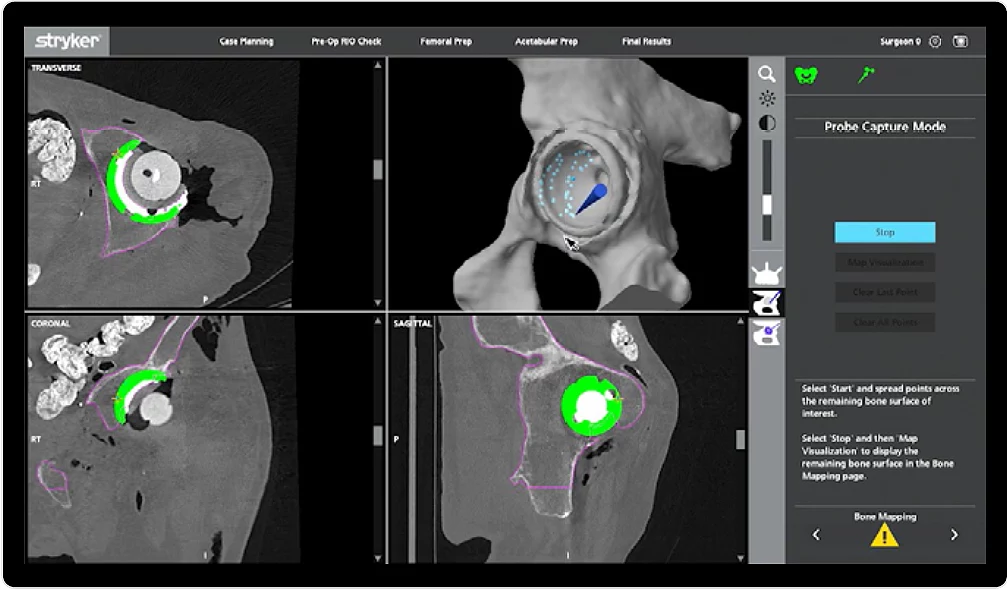
Bone anatomy, pelvic tilt, and hip-spine relationship are evaluated using CT images.
Mako Total Hip, built on over 15 years of clinical experience, uses 3D CT planning and AccuStop™ haptic technology to help plan the placement of prosthetic components in total hip replacement on an individual basis.
This device was developed to provide a more detailed understanding of the patient's anatomy in primary, complex primary, and revision cases; and to visualize the cup, stem, augment, and screw layout before surgery.
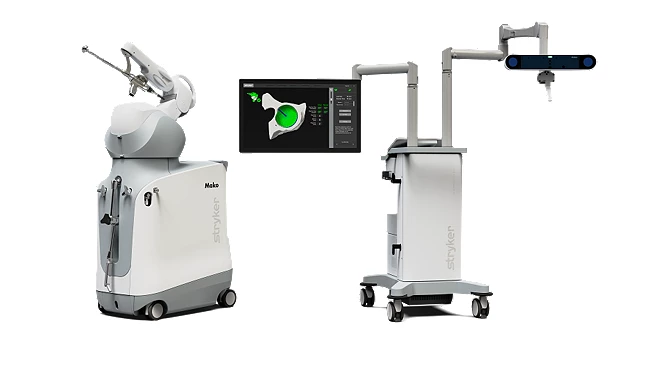
The patient's hip and pelvic anatomy is modeled in three dimensions. The size, location, hip center, leg length, and offset values of the implant are planned before the surgery; the surgeon receives real-time feedback during the procedure.
Bone anatomy, pelvic tilt, and hip-spine relationship are evaluated using CT images.
Cap and stem size, center, slope, version, leg length, and offset targets are planned.
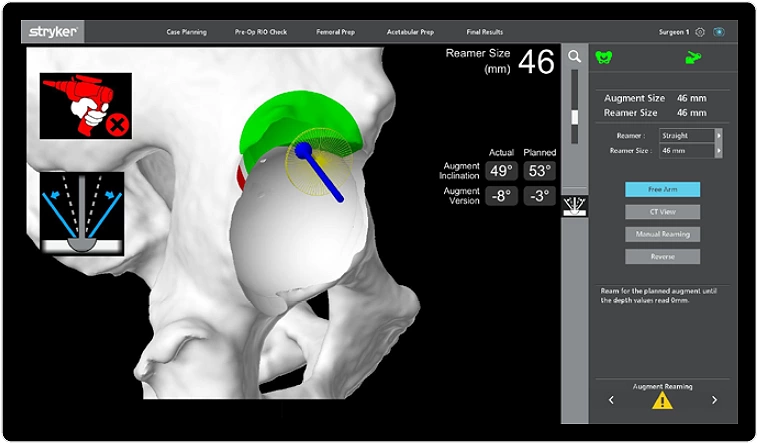
AccuStop™ haptic technology helps to execute the carving operation within the planned center and depth limits.
In the workflow from primary to revision, cap, augment, and screw options can be planned in three dimensions; bone surface can be mapped during surgery, and the carving process can be performed with the support of a robotic arm.
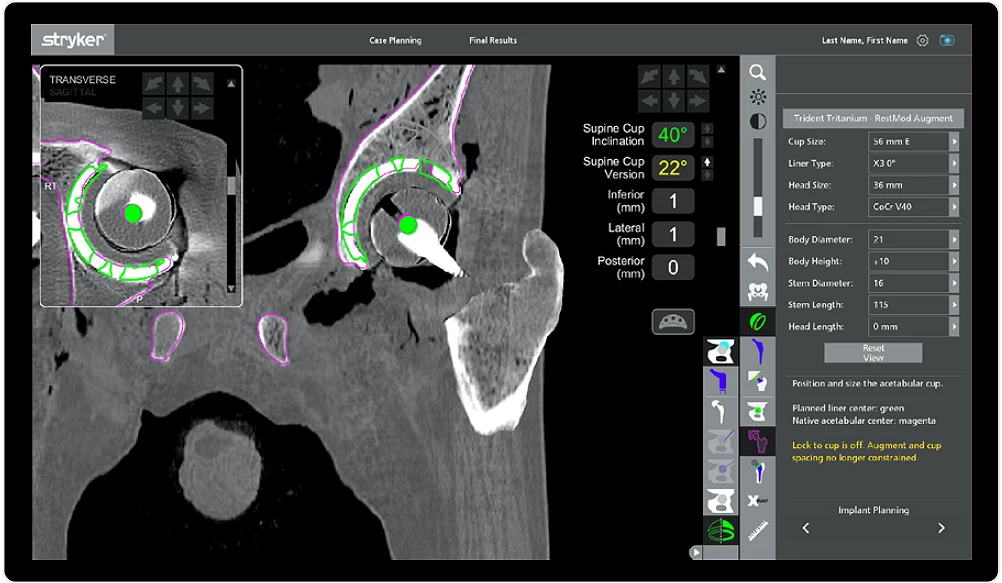
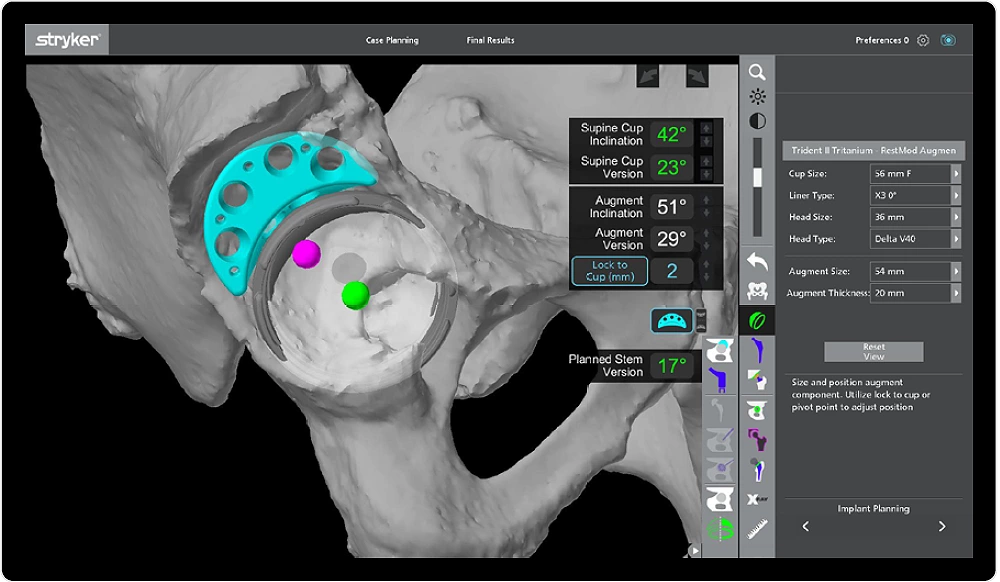
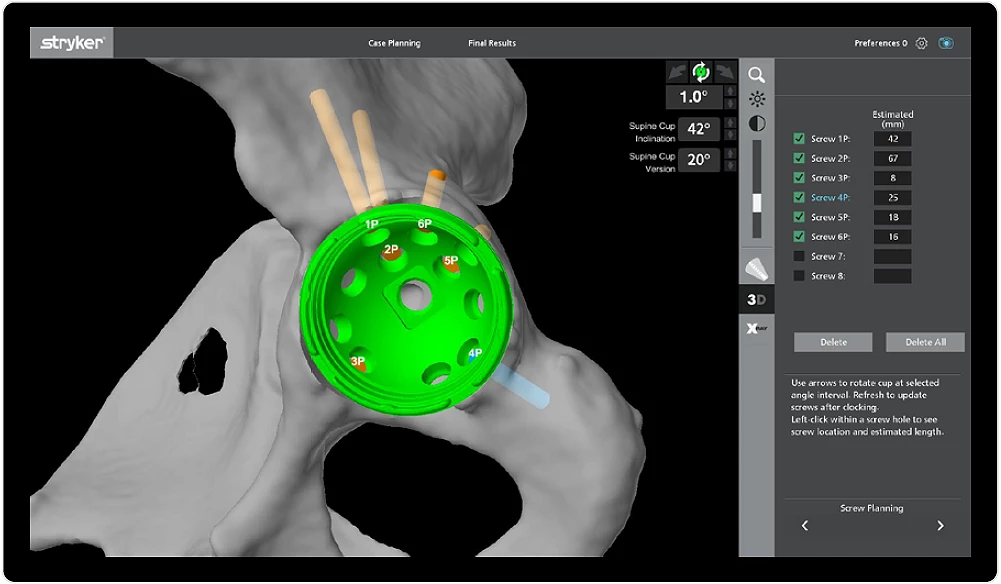
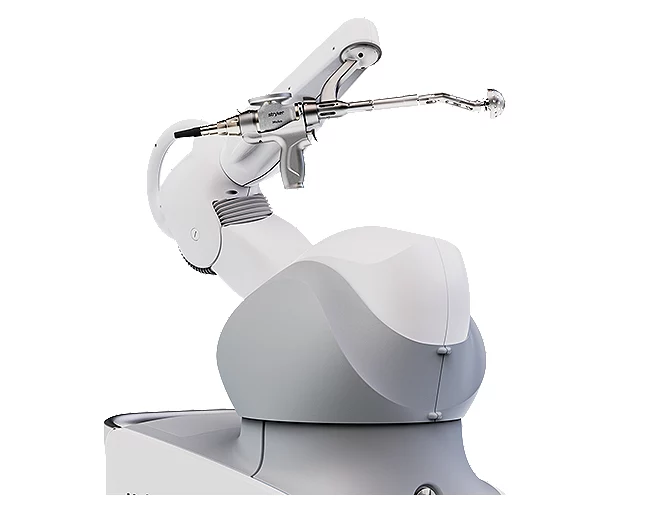
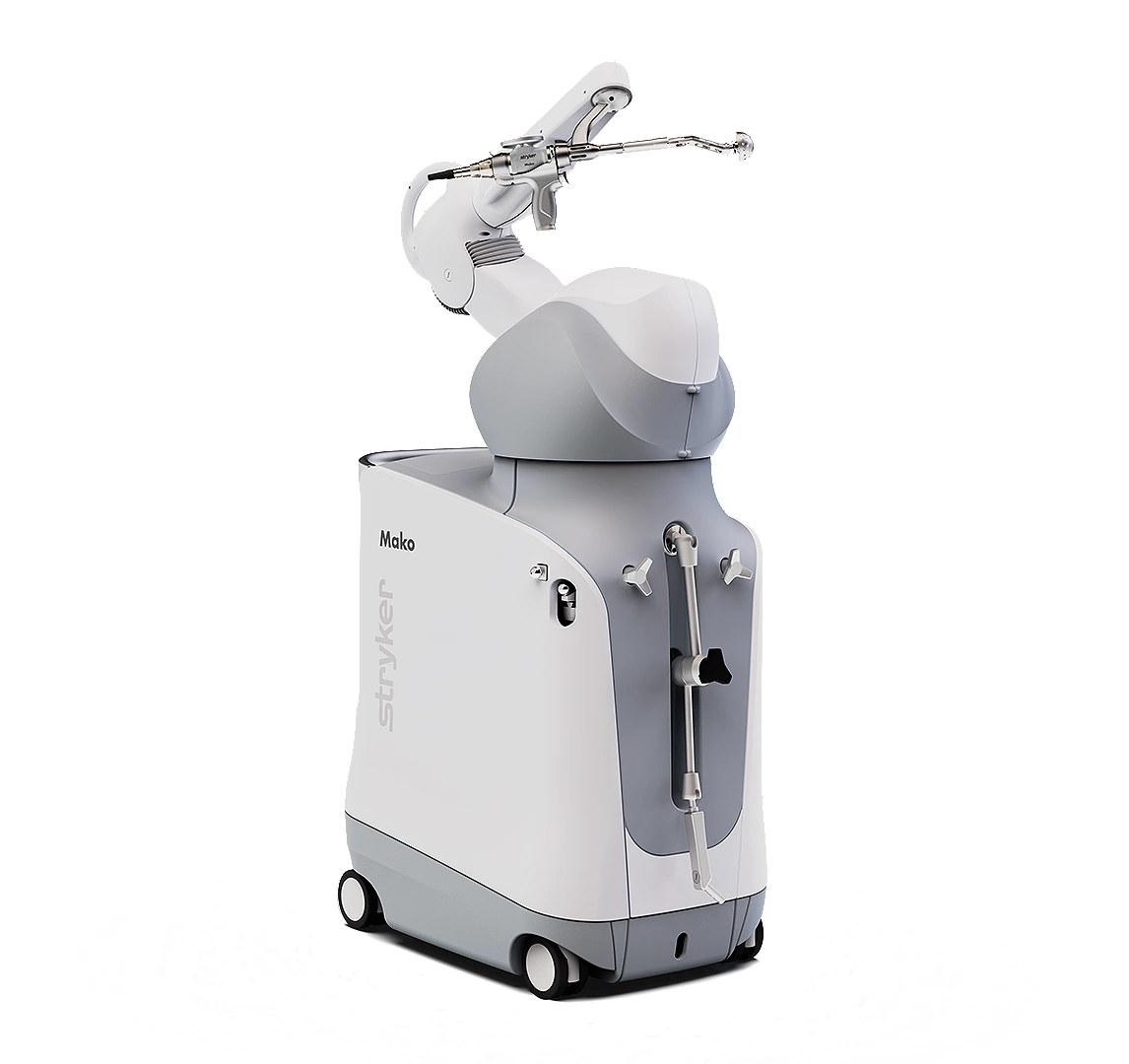
Mako Total Hip's SmartRobotics™ features aim to optimize component placement, reconstruct hip biomechanics, and enhance the surgical experience.
Findings vary depending on patient selection and study design; the following points are not guaranteed results.
Studies have reported more consistent results in cup positioning and hip center reconstruction in robotic hip replacement.
Some comparative studies have reported lower dislocation rates compared to manual surgery.
Some patients have reported being less aware of their artificial hips in daily life and having better functional scores.
In some series, a reduction in hospital stay has been observed compared to manual total hip replacement.
Controlled carving within planned limits can, in appropriate cases, support the goal of smaller cups and greater bone preservation.
Robotic assistance has been reported to reduce the physical and mental burden on the surgeon, especially during carving.
The system provides measurement support for leg length and offset; however, complete equality cannot be guaranteed in every patient. Safe prosthesis positioning and soft tissue balance are evaluated together.
Mako Total Hip can be used with different surgical approaches, including a direct anterior approach. The surgeon determines the appropriate approach based on the patient's anatomy.
The current Mako Total Hip Advanced Primary and Revision procedure offers cup, augment, screw, and some stem planning features for selected complex primary and revision cases. Suitability depends on the center's system and the patient's condition.
This information is for informational purposes only and does not substitute for medical examination or personalized treatment advice. Mako, SmartRobotics, and AccuStop are trademarks of Stryker.